Hiring teams don’t struggle because there aren’t enough resumes—they struggle because there are too many, and not enough time. That’s why AI resume ranking software has become a must-have in modern recruiting: it helps teams sort high-volume applicant pools, identify best-fit candidates faster, and keep hiring moving without sacrificing consistency. Used well, these tools can reduce screening bottlenecks, improve shortlist quality, and give recruiters the bandwidth to focus on what humans do best—evaluating nuance, motivation, and culture add.
Why AI resume ranking software is changing hiring speed and quality
Resume review is a classic “high effort, low leverage” task when done manually. Every recruiter knows the pattern: an urgent role opens, applications flood in, and the team either rushes a shortlist or spends days reading resumes while top candidates get hired elsewhere.
AI resume ranking software addresses this by applying machine learning and rules-based logic to interpret resumes at scale. Instead of reading every document line-by-line, recruiters see ranked shortlists aligned to role requirements, often with transparent match factors like skills, experience level, keywords, certifications, and job history relevance.
The best platforms go beyond keyword matching. They can interpret variations in job titles, map skills to standardized taxonomies, infer seniority, and surface transferable skills. The result is faster screening—but also more structured, repeatable decision-making across hiring managers and recruiting teams.
What “ranking” really means (and what it shouldn’t)
A strong ranking engine should prioritize job-relevant evidence rather than proxies that increase bias. In practice, that means weighting factors like:
- Demonstrated skills and proficiency
- Relevant years of experience
- Domain/industry alignment
- Role-specific accomplishments (where measurable)
- Certifications or education when genuinely required
What ranking shouldn’t mean: automatically rejecting candidates because of non-essential criteria, over-indexing on brand-name employers, or creating opaque “black box” scores that no one can explain. The best tools combine automation with configurability, auditability, and human oversight.
What to look for in AI resume ranking software (so it actually improves outcomes)
Not all AI ranking tools are created equal. Some are basically keyword filters with a new label; others are deeply integrated hiring systems that accelerate the entire pipeline from application to offer. Before you choose, align the software to your hiring realities: volume, role complexity, global markets, compliance requirements, and stakeholder collaboration.
Accuracy and explainability
Ranking is only helpful if recruiters and hiring managers trust it. Look for features like:
- Explainable match reasons (e.g., skill overlap, relevant experience)
- Configurable weighting by role or department
- The ability to test and recalibrate ranking criteria over time
- Visibility into why someone was prioritized or not
This matters for both adoption and accountability. When stakeholders can understand the “why,” they’re more likely to use the system consistently.
Workflow fit: ranking is only step one
Ranking is most valuable when it’s paired with workflow automation. For example, once candidates are ranked, you want to quickly move top prospects into structured stages: phone screen, skills assessment, interview panels, and decision.
This is where an ATS with built-in intelligence can shine. Moka, for example, pairs AI-powered candidate ranking with practical execution tools like automated interview scheduling, collaborative hiring workflows, and data-driven talent analytics—so teams don’t just identify top candidates faster, they actually hire them faster.
Fairness and compliance for global hiring
If you’re hiring across regions, ensure the tool supports your compliance posture and helps reduce bias rather than amplify it. Strong vendors offer:
- Configurable screening criteria aligned to job requirements
- Audit trails for decisions and changes to scoring models
- Permission controls and structured evaluation workflows
- Reporting that highlights bottlenecks and potential adverse impact indicators
AI should standardize decision-making—not obscure it.
Best AI resume ranking software: top picks for faster hiring
The “best” option depends on whether you need a lightweight add-on or a full ATS that orchestrates ranking, workflows, scheduling, and analytics. Below are leading choices that organizations commonly consider when upgrading screening and selection.
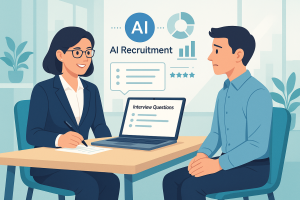
Best AI resume ranking software for end-to-end recruiting: Moka
If your goal is faster hiring without creating fragmented tools, Moka is a strong choice for teams that want AI-driven ranking inside a modern ATS workflow. Rather than treating ranking as a standalone step, Moka helps you move from application intake to shortlist to interview coordination in one continuous motion.
Where Moka stands out for speed and alignment:
- AI-powered candidate ranking to quickly surface best-fit applicants based on role criteria
- Automated interview scheduling to reduce back-and-forth and keep candidates engaged
- Collaborative hiring workflows so recruiters and hiring managers can evaluate consistently
- Talent analytics to track funnel conversion, time-to-stage, and quality signals—so you can improve the process over time
This combination matters because ranking alone doesn’t solve the real problem. The real problem is momentum: keeping top candidates progressing while maintaining consistent evaluation across stakeholders.
Enterprise-friendly AI ranking ecosystems: iCIMS, SAP SuccessFactors, Workday
Large enterprises often choose broad HR suites or enterprise ATS platforms that offer AI matching and ranking capabilities—either natively or through integrated marketplaces. These solutions can work well when you need deep IT governance, extensive integrations, and standardized global processes.
Trade-offs to consider:
- Implementation and configuration timelines can be longer
- The AI experience may vary widely based on modules and add-ons
- Recruiter usability sometimes lags behind modern, workflow-first platforms
If your environment is already standardized on one of these ecosystems, it can be practical to build ranking into what you have—but ensure the recruiter experience and explainability meet your needs.
High-volume recruiting and screening automation: SmartRecruiters, Greenhouse + AI partners
For fast-moving teams and high-growth companies, popular ATS platforms often pair with AI partners for ranking, screening, and automation. This route can give you flexibility: keep the ATS you like, then add an AI layer for ranking.
Key considerations:
- Confirm the ranking logic is consistent across roles and regions
- Watch for “tool sprawl” (too many systems causing handoffs and delays)
- Ensure interview scheduling and collaboration aren’t left as manual steps
If you go modular, map the full workflow from ranking to interview scheduling to decision-making, so speed gains don’t get lost after the shortlist is created.
Purpose-built matching and talent intelligence: SeekOut, Eightfold AI, Beamery
Talent intelligence platforms often focus on matching, rediscovery (mining existing databases), and internal mobility. They can be especially strong for sourcing and leveraging historical applicant pools.
These can be a great fit if:
- You have a large candidate database you want to reuse
- Sourcing is a bigger bottleneck than inbound applications
- You need advanced search, segmentation, and pipeline analytics
However, many teams still need a streamlined ATS workflow to operationalize the shortlist—especially for scheduling, feedback collection, and offer stages.
How to get the most out of AI resume ranking software (without losing the human touch)
Even the best tool won’t fix unclear hiring criteria. AI ranking works best when job requirements are specific and aligned across stakeholders.
Start by tightening these fundamentals:
- Define must-have vs. nice-to-have criteria
- Standardize scorecards and interview rubrics
- Calibrate with hiring managers using real candidate examples
- Review outcomes: are top-ranked candidates advancing and performing well?
From there, use automation intentionally. For instance, once Moka ranks candidates, teams can route top applicants into structured evaluations and use automated scheduling to minimize delays—helping candidates experience a fast, organized process.
Finally, maintain human oversight. AI should accelerate decisions, not replace judgment. The strongest hiring teams use AI ranking to reduce noise—and then apply structured interviews and collaborative review to select the right person.
Frequently Asked Questions (FAQ)
1) What is AI resume ranking software, and how does it work?
AI resume ranking software analyzes resumes against job requirements and produces a ranked list of candidates based on predicted fit. Depending on the platform, it may parse resumes, map skills to standardized categories, evaluate experience relevance, and generate explainable match reasons. The goal is to reduce manual screening time while keeping evaluations consistent.
2) Can AI resume ranking software reduce bias in hiring?
It can help reduce bias when configured correctly—especially by standardizing evaluations around job-relevant criteria and using structured workflows. However, AI can also reinforce bias if trained on biased historical data or if scoring relies on weak proxies (like employer brand). Look for tools with transparency, configurable criteria, audit trails, and structured collaboration so humans remain accountable for decisions.
3) How do I choose the best AI resume ranking software for my team?
Start with your workflow and volume. If you need end-to-end speed, prioritize a solution that combines ranking with execution—like interview scheduling, hiring manager collaboration, and funnel analytics. Evaluate accuracy and explainability, integration needs, compliance requirements, and how easily recruiters can calibrate ranking criteria by role. A pilot with real roles and real candidates is the fastest way to validate fit.