In 2026, efficiency isn’t just a KPI—it’s the difference between scaling confidently and getting buried under operational drag. That’s why Smarter Automation solutions are moving from “nice-to-have” tooling into the core of how modern teams run finance, customer operations, IT, and especially HR. The best automation strategies don’t simply replace manual work; they reduce errors, compress cycle times, and generate cleaner data that improves every downstream decision. The payoff is real: faster execution, lower costs, higher quality, and a better experience for employees and candidates alike.
Smarter Automation solutions in 2026: What’s changed (and why it matters)
Automation used to mean rigid rules and brittle workflows. In 2026, it’s increasingly driven by AI, event-based integrations, and systems that learn from outcomes—not just inputs. That shift matters because organizations are dealing with three compounding pressures: rising labor costs, higher candidate and customer expectations, and an explosion of tools that don’t naturally talk to each other.
The modern automation opportunity is less about “doing more with less” as a slogan and more about designing a company operating system where repetitive work is handled reliably and where humans focus on judgment, relationships, and strategy. The most successful companies treat automation as a product: they prioritize, test, measure ROI, and continuously refine.
Smarter Automation solutions that cut costs without cutting corners
Cost reduction works best when it’s a byproduct of better execution. When you automate the right processes, you don’t just reduce headcount dependency—you reduce rework, compliance risk, missed SLAs, and time-to-hire. The following ten approaches are proven, repeatable, and especially relevant to 2026’s AI-enabled operations.
1) Automate intake and triage to eliminate “hidden” work
Every department has an intake problem: requests arrive through email, chat, spreadsheets, and hallway conversations. That chaos creates duplicated effort and inconsistent prioritization. A smarter approach is to route all requests through structured forms tied to workflows that auto-tag, assign, and escalate.
In recruiting, this looks like standardizing requisition intake and automating approvals. Once a role is approved, workflows can automatically trigger job posting, interviewer pool suggestions, and timeline reminders—without someone manually coordinating every step.
2) Use AI-driven prioritization instead of first-in, first-out
The biggest efficiency wins come from doing the right work first. AI-based prioritization helps teams focus on the highest-impact items based on business rules and historical outcomes.
For talent acquisition, AI-powered ranking is a standout example. Platforms like Moka support AI-powered candidate ranking, helping recruiters and hiring managers quickly identify strong matches and reduce time spent screening. That efficiency compounds when paired with collaborative workflows that keep feedback structured and timely.
3) Replace manual scheduling with end-to-end interview automation
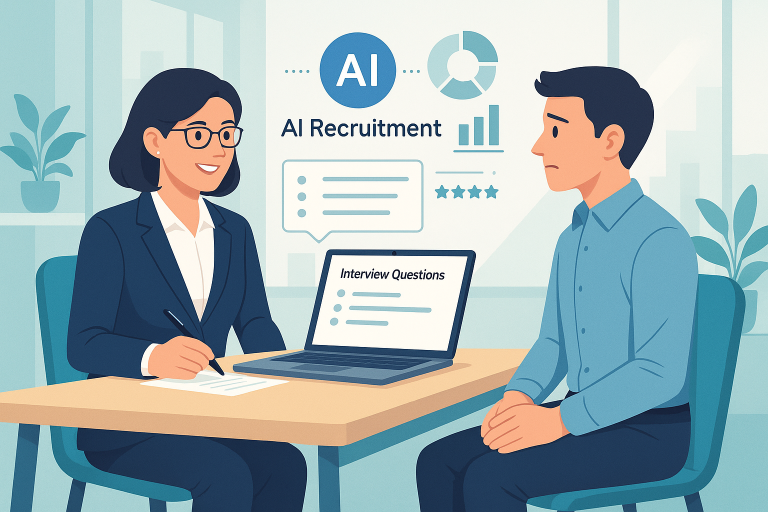
Interview scheduling is one of the most underestimated cost centers in recruiting. Coordinating calendars, reschedules, time zones, and interview panels can consume hours per role—especially when hiring at scale.
Automated interview scheduling solves this by syncing interviewer availability, sending confirmations, handling reschedules, and ensuring candidates get clear instructions. The cost savings are immediate (less coordinator time), but the strategic value is even bigger: faster time-to-hire and fewer candidate drop-offs.
4) Automate handoffs between systems to stop paying the “integration tax”
Organizations often pay twice: once for software, and again for the manual work required to move data between tools. Smarter automation uses integrations and event triggers to keep systems aligned—CRM to ERP, ATS to HRIS, ticketing to knowledge base, and more.
In HR tech, this means candidate status changes can automatically trigger background checks, document collection, onboarding tasks, and stakeholder notifications. The goal is to remove swivel-chair operations so teams can focus on exception handling, not data ferrying.
5) Build “collaborative automation” to reduce approval bottlenecks
Automation should accelerate collaboration—not replace it. Many processes stall at approvals because stakeholders lack context, don’t know what to review, or are asked too late.
Tools that support collaborative hiring workflows (like Moka) help by centralizing feedback, standardizing evaluation criteria, and nudging reviewers at the right time. The automation isn’t just reminders—it’s structured decision-making that reduces rework and ensures faster, higher-quality outcomes.
6) Standardize repeatable workflows before you automate them
Automating a messy process just makes the mess faster. In 2026, the smartest teams map their workflows, identify variability, and define what “good” looks like before introducing automation.
For recruiting, that could mean standardizing interview stages by role family, defining scorecards, and setting SLAs for feedback. Then automation can enforce the process, reduce variance, and make performance measurable.
7) Use analytics-driven automation to target waste, not guesses
The quickest way to waste budget is automating based on assumptions. Instead, use analytics to pinpoint where time and money leak: bottlenecks, high-error steps, repeat escalations, or stages with high drop-off.
With data-driven talent analytics, teams can see where candidates stall, which sources convert, and how interview loops affect acceptance rates. Those insights can automatically trigger improvements—for example, adding an interviewer when capacity is low or adjusting outreach when a pipeline goes cold.
8) Implement exception-based operations (automation handles the “normal”)
The operational model of the future is simple: automation handles standard cases, humans handle exceptions. This approach reduces workload without compromising quality.
In HR, that means most candidates move through screening, scheduling, and communications automatically—while recruiters intervene for edge cases like complex compensation, relocation, niche skills, or executive searches. This is where automation becomes a leverage tool rather than a blunt instrument.
9) Automate compliance and audit trails to reduce risk and labor
Compliance is expensive when it’s manual. Smart automation generates audit trails by default: who approved what, when decisions were made, which criteria were used, and how communications were handled. This reduces legal exposure, improves consistency, and cuts the time required for audits.
For hiring teams, standardized scorecards, tracked feedback, and controlled access to candidate data can support fairer processes—while saving hours of documentation work.
10) Create a continuous improvement loop (automation that gets better each quarter)
The best Smarter Automation solutions aren’t “set and forget.” They are measured and iterated. Create a quarterly cadence to review automation performance: cycle time, error rates, satisfaction, and cost per transaction.
In recruiting, that could mean reviewing time-to-fill, candidate experience metrics, interviewer load, and offer acceptance—then adjusting workflows, templates, and AI ranking calibration. When your automation is tied to outcomes, every iteration becomes a cost-saving lever.
Smarter Automation solutions + AI recruiting: Where Moka fits in a modern tech stack
Recruiting is one of the clearest arenas for ROI because it touches revenue (speed of hiring), cost (team workload), and risk (compliance and quality). Moka’s approach aligns with what high-performing teams need in 2026: automation that accelerates the process while improving decision quality.
With AI-powered candidate ranking, Moka helps teams prioritize talent faster and more consistently. With automated interview scheduling, it eliminates a major operational bottleneck. And with collaborative hiring workflows, it brings structure to feedback so decisions don’t stall across email threads and calendar chaos. Layer in talent analytics, and leaders can connect process changes to measurable outcomes—turning recruiting from a reactive function into a scalable operating system.
How to choose the right automation roadmap (so savings are real)
If you’re planning automation initiatives for 2026, focus on three filters:
- Volume: High-frequency tasks are the fastest wins (scheduling, intake, status updates, approvals).
- Variance: Start with processes that are predictable; move to complex ones once the foundation is stable.
- Value: Automate tasks that influence outcomes—cycle time, quality, compliance—not just busywork.
Finally, don’t overlook change management. Automation succeeds when teams trust it, understand it, and can see how it improves their day-to-day work. Training, clear ownership, and transparent metrics are just as important as the tool itself.
Frequently Asked Questions (FAQ)
1) What are Smarter Automation solutions, and how are they different from traditional automation?
Smarter Automation solutions combine workflow automation with AI-driven decision support, analytics, and integrations that reduce manual handoffs. Traditional automation often relies on rigid rules and breaks when conditions change. Smarter approaches adapt to real-world variability, prioritize work based on outcomes, and continuously improve through data.
2) Which business processes deliver the fastest ROI with Smarter Automation solutions?
The fastest ROI typically comes from high-volume, repeatable processes with clear success metrics—such as request intake, approvals, scheduling, status communications, and data synchronization across tools. In recruiting, interview scheduling and candidate triage are especially high-impact because they reduce time-to-hire and free up recruiters for higher-value work.
3) How do Smarter Automation solutions improve recruiting efficiency without hurting candidate experience?
When implemented well, automation improves candidate experience by making communication faster, scheduling smoother, and decisions more consistent. For example, Moka’s automated interview scheduling reduces delays and confusion, while AI-powered candidate ranking helps teams respond quickly to qualified applicants. The key is balancing automation with human touchpoints at moments that require empathy and judgment.